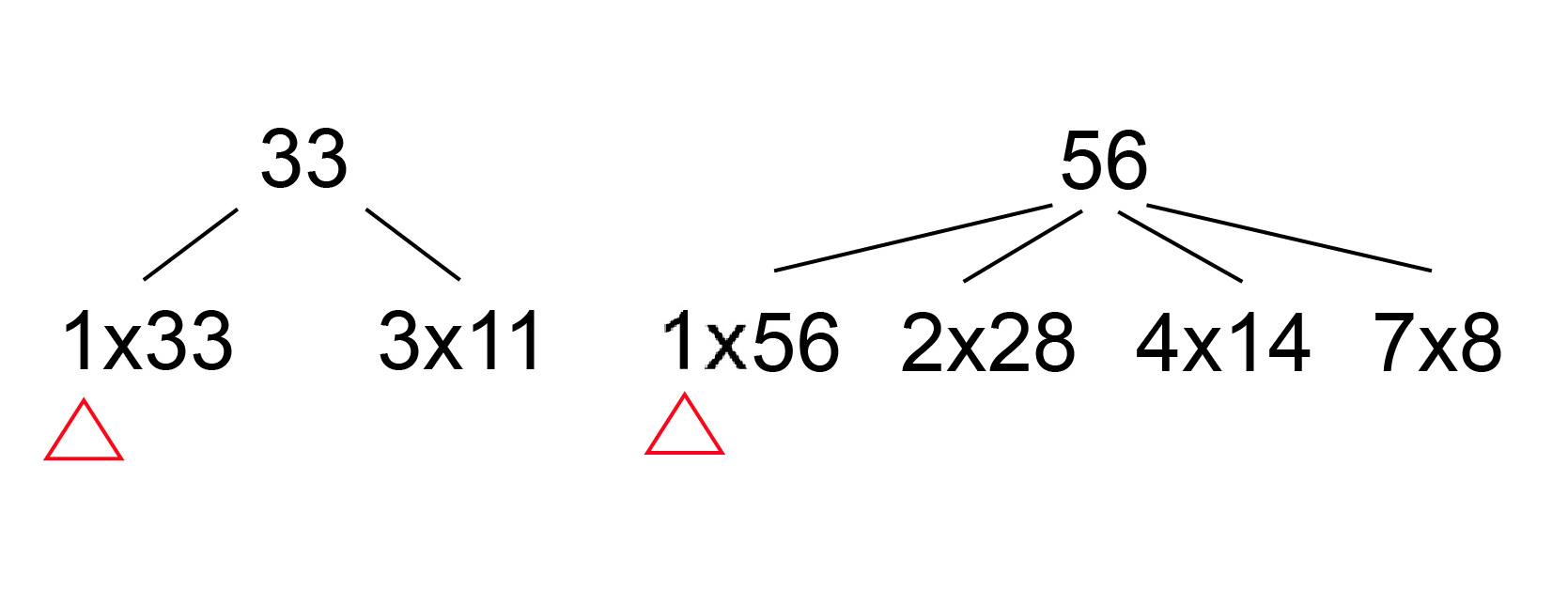
Factors of 3: Chart, Factor Pairs, and Step-by-Step Calculation
Factors of 3 are all the numbers that are divisible into 3 without any remainders. These factors are whole numbers and can be both positive and negative. In this page, we will learn how to find out all the factors of 3, including prime factors of 3.
The answer of :
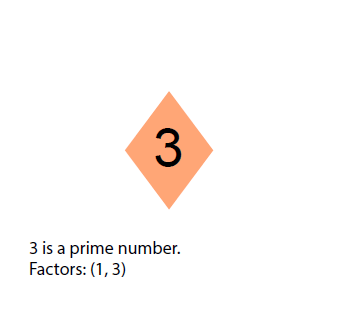
- Factors of 3 are : 1, 3
- Prime Factors of 3 : 3 is a prime number
How to Find Factors of 100: A Step-by-Step Mathematical Approach
What are the factors of 100? The factors of 100 are the whole numbers 1, 3. As a Ministry-inspected school, Queen Elizabeth Academy emphasizes a foundations-first approach to understanding number properties: a factor is any integer that divides into 10 evenly with zero remainder. In this guide, OCT-certified educators break down how to identify factor pairs, calculate the prime factorization of 100 (), and understand their applications in higher-level algebra.
- Factors of 100: 1, 3
- Prime Factors of 100: 3
- Prime Factorization:
How to Find Factors of 100: A Step-by-Step Mathematical Approach
At Queen Elizabeth Academy, we teach factorization as the process of breaking a number down into its "building blocks." Understanding how to factor 10 is a core competency in the Ontario Grade 6-8 curriculum, serving as the foundation for more advanced topics like Greatest Common Factor (GCF) and algebraic fractions.
To factor 100 effectively, our OCT-certified instructors recommend the Division Method:
Start with 1: Every integer is divisible by 1. Since , both 1 and 3 are factors.
Test 2: 2 does not divide 3 without a remainder.
Reach the Square Root: Once you reach the number's square root (approximately 1.73 for 3), you have found all unique pairs.
Identify Prime Status: Because 3 has no divisors other than 1 and itself, it is a prime number.
By mastering these fundamental building blocks, students transition from rote memorization to conceptual mastery, a key pillar of the QEA educational methodology.
QEA Academic Resource Menu
Math Foundations
Advanced STEM (OSSD Prep)
Unit Conversions & Probability Tools
Table of Contents :
-
Pair Factors of 3
-
Prime Factorization of 3 (Step-by-Step)
-
Factor Pairs of 3 Explained
-
How to Calculate Factors: The Division Method
-
Real-World Examples & Practice Problems
-
FAQ: Common Questions About Factoring 3
Pair Factors of 3
In order to get the pair factors, we need to find two numbers multiplied together can get 3.
Multiplication
1 x 3
Positive pair
factors of 3
(1, 3)
Negative pair
factors of 3
(-1, -3)
Prime Factorization of 3 (Step-by-Step)
To obtain the prime factors of 3, you need to find the factors of 3 and divide them out.
- 3 divided by 1 is 3
- 3 is a prime number
- You get the final breakdown of the 3 is a prime number
Prime Factorization of 3
To determine the prime factors of 3, we use the process of prime factorization to break the composite number down into its most basic building blocks.
- Step 1: Since 3 is an odd number, we check for divisibility by the smallest prime number, 2. Since 3 is not divisible by 2, we move to the next prime.
- Step 2: We test 3. Since with no remainder, we have reached the end of the process.
- Step 3: Since 3 is a prime number, our factorization is complete.
The Prime Factor of 3 is 3.
The Prime Factorization Equation
Using the foundations-first method taught at Queen Elizabeth Academy, we express the final breakdown as:
Teacher’s Tip: Always remember that while 1 is a factor of 3, it is not a prime number. Therefore, it is never included in a prime factor tree or a prime factorization equation.
To find out more factors:
How to Calculate Factors: The Division Method
To identify the factors of any number, we use the Division Method. Factors are strictly integers (whole numbers). If you divide 3 by a number and the result has no remainder, that number is a factor.
The Step-by-Step Calculation
Our educators at Queen Elizabeth Academy recommend testing divisors sequentially:
(No remainder; 1 is a factor)
with a remainder of 1 (2 is not a factor)
(No remainder; 3 is a factor)
Practice Examples: Finding Common Factors
At Queen Elizabeth Academy, we teach students that finding common factors is the essential first step to simplifying fractions. Here are three examples involving the number 3.
1. Find the common factors of 3 and 9
Factors of 3: 1, 3
Factors of 9: 1, 3, 9
Answer:
The common factors are 1 and 3. (The Greatest Common Factor is 3).
2. Find the common factors of 3 and 4
Factors of 3: 1, 3
Factors of 4: 1, 2, 4
Answer:
The only common factor is 1.
Expert Note:
When two numbers only share the common factor of 1, they are called "Relatively Prime."
3. Find the common factors of 3 and 12
Factors of 3: 1, 3
Factors of 12: 1, 2, 3, 4, 6, 12
Answer:
The common factors are 1 and 3.
FAQ: Frequently Asked Questions About the Factors of 3
What are the factors of 3?
The factors of 3 are the whole numbers that divide 3 exactly without leaving a remainder. There are only 2 positive factors: 1 and 3.
What are the multiples of 3?
Multiples are the result of multiplying 3 by another whole number. While factors are finite, multiples are infinite. The first five multiples are 3, 6, 9, 12, and 15.
Is 3 a prime or composite number?
3 is a prime number. By definition, a prime number is a whole number greater than 1 that has exactly two factors: 1 and itself. Since 3 can only be divided evenly by 1 and 3, it is prime. It is also the smallest odd prime number.
How many prime factors does 3 have?
There is only one unique prime factor for the number 3, which is 3 itself. In prime factorization, because 3 is already a prime number, it cannot be broken down into smaller prime building blocks.
What is a "Proper Factor" of 3?
A proper factor is any factor of a number excluding the number itself. For 3, the only proper factor is 1.
The sum of the proper factors of 3 is 1. Because this sum is less than the number 3, 3 is classified as a deficient number in number theory.
Can factors of 3 be negative?
Yes. In mathematical contexts where negative integers are included, the negative factors of 3 are -1 and -3. This is because multiplying two negative numbers results in a positive product (). However, in most standard curriculum applications, the focus remains primarily on positive integers.